- Home
- Blogs
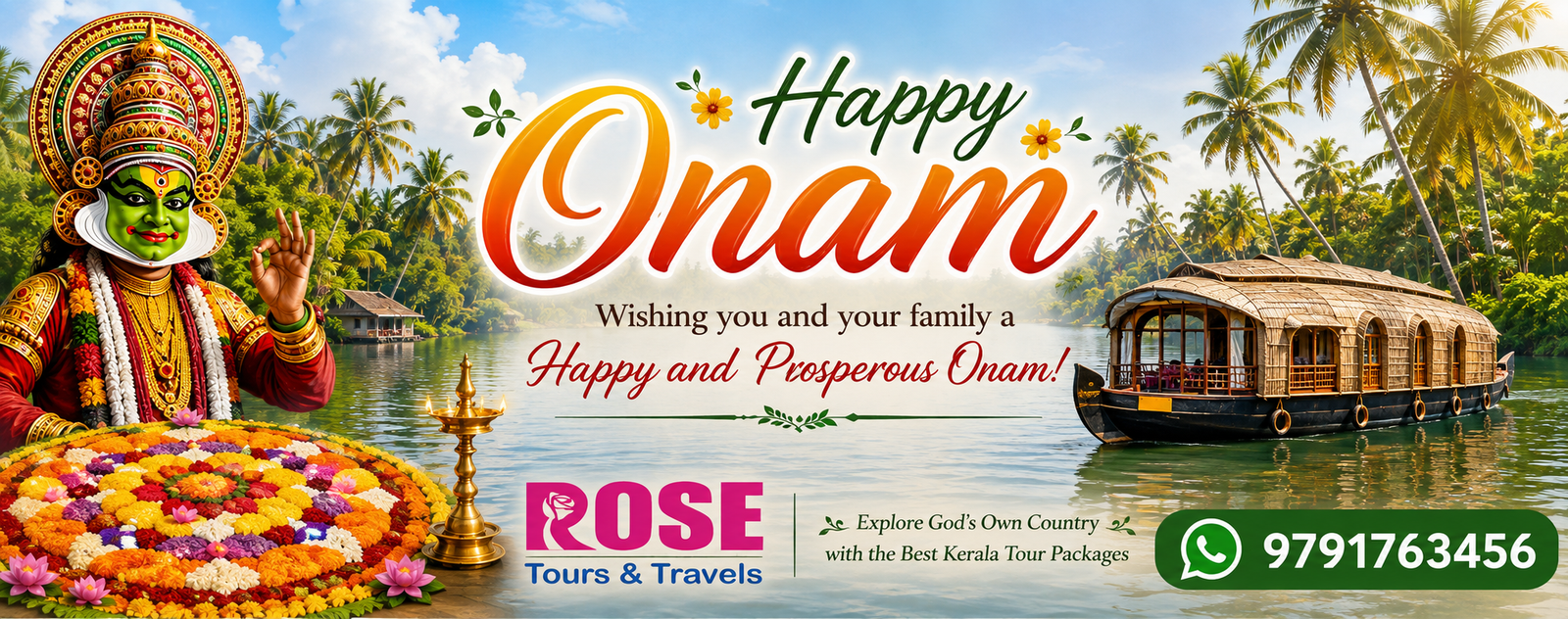
- On 25 Aug 2026
Onam Festival: A Celebration of Kerala’s Culture, Food and Traditions
Onam is one of Kerala’s most cherished and colourful festivals, celebrated with great enthusiasm by Malayalis in Kerala and around the world. It is traditionally associated with the harvest season and the legendary King Mahabali, whose reign is remembered as a golden age of prosperity, equality and happiness. According to tradition, Mahabali returns to Kerala during Onam to visit his people, and families welcome him with flowers, food, celebrations and togetherness. The festival is therefore not simply a religious occasion but a beautiful expression of Kerala’s culture, hospitality and community spirit.
Onam celebrations traditionally begin with Atham and build towards Thiruvonam, the most important day of the festival. During this period, homes, streets and public spaces come alive with flowers, music, traditional performances and festive gatherings. One of the most recognisable traditions is the Pookalam, an intricate floral carpet made using fresh flowers. Families gradually create increasingly elaborate designs as the festival approaches, filling their entrances and courtyards with colour and beauty. The Pookalam is traditionally regarded as a welcoming symbol for King Mahabali and has become one of the most beloved visual symbols of Onam.
Onam is also a celebration of Kerala’s rich performing-arts traditions. Cultural programmes may feature Thiruvathirakali, Kathakali, Pulikali, Kummattikali, Thumbi Thullal and other folk and traditional performances. Pulikali, in particular, is famous for its energetic performers painted and dressed as tigers, dancing to traditional rhythms. Women participate in Thiruvathirakali, while communities organise games, singing, dancing, processions and competitions that bring people together. These traditions demonstrate how Onam preserves Kerala’s artistic heritage while creating opportunities for families and communities to celebrate together.
The Excitement of Snake Boat Competitions
One of the most spectacular sights associated with Kerala’s festive season is Vallam Kali, or the traditional snake boat race. The long, elegant boats known as chundan vallams are powered by large teams of rowers who paddle together with remarkable coordination. The rhythmic movement of the oars, traditional boat songs, drums and the cheering crowds create an unforgettable atmosphere along Kerala’s rivers and backwaters.
Snake boat racing is much more than a sporting competition. It represents teamwork, discipline, community pride and Kerala’s deep relationship with its waterways. Major races are held at different locations across the state, with events such as the Nehru Trophy Boat Race becoming internationally recognised attractions. Kerala Tourism describes snake boat races as an integral part of the state's cultural heritage, with communities coming together to maintain boats, train rowers and preserve the tradition.
The spirit of Vallam Kali is particularly remarkable because the strength of the boat depends on the synchronisation of its rowers. Dozens of paddlers must move almost as one, following the rhythm of the boat songs and commands. Beyond competition, these races create a strong sense of unity and belonging among the participating villages and communities. Contemporary races continue to preserve this traditional spirit while attracting visitors from across India and abroad.
The Grandeur of Onam Sadya
No discussion of Onam is complete without mentioning the famous Onam Sadya, the traditional vegetarian feast served on a banana leaf. Sadya is one of the most anticipated parts of the festival because it brings together family, friends and communities around a generous meal.
A traditional Sadya can include a remarkable variety of dishes, including rice, avial, sambar, olan, thoran, erissery, kaalan, pachadi, kichadi, pickles, banana chips, sharkara varatti, papadam, rasam, buttermilk and payasam. The dishes represent a wide range of flavours and textures, from spicy and tangy curries to sweet desserts. Kerala Tourism describes Onasadya as one of the principal attractions of Onam and notes that the feast is traditionally served on a plantain leaf.
Payasam is an especially loved part of the feast. Different varieties may be prepared using rice, lentils, milk, coconut milk, jaggery and other ingredients. Dishes such as Ada Pradhaman and Parippu Pradhaman add a rich and festive sweetness to the meal. The Sadya is not merely about eating; the manner in which the food is prepared, served and shared reflects Kerala’s traditions of hospitality and togetherness.
Onam and Kerala’s Culture
The beauty of Onam lies in the way it brings different aspects of Kerala’s culture together. Traditional clothing, music, dance, food, floral decorations, games and community celebrations all become part of the festive experience. Many people wear traditional Kerala attire, including the elegant kasavu style, while homes are cleaned and decorated in preparation for the celebrations.
Families often use the festival as an opportunity to reunite with relatives and friends. Children participate in games and cultural programmes, while communities organise competitions and public celebrations. Shopping is also an important part of the season, with people purchasing new clothes, gifts and household items.
The festival also reflects Kerala’s close connection with nature. The harvest-season origins of Onam, the use of fresh flowers for Pookalams and the prominence of rivers and backwaters in boat races all demonstrate how closely the festival is connected to the land and waterways of Kerala. The lush landscapes, coconut palms, traditional boats and village life create a unique setting that makes experiencing Onam in Kerala particularly memorable.
Experiencing Onam in Kerala
For visitors, Onam offers an opportunity to experience Kerala beyond its famous beaches and hill stations. Travelling through the backwaters during the festive season can reveal colourful village celebrations, traditional boats, coconut-lined waterways and local cultural programmes. Watching a Vallam Kali competition, enjoying an authentic Sadya, seeing a beautiful Pookalam and experiencing traditional music and dance can provide an unforgettable introduction to Kerala’s heritage.
Onam ultimately represents happiness, prosperity, gratitude, togetherness and hospitality. Whether celebrated in a traditional Kerala village, a bustling city or by Malayali communities far from home, the heart of the festival remains the same: welcoming loved ones, sharing food, remembering cultural traditions and celebrating the spirit of unity.
A Festival Closure Announcement
On the occasion of the Onam festival, Poovar Boating will remain closed on 26th August 2026. We request our valued guests to kindly take note of the closure and thank you for your understanding and support during the festival celebration.
Rose Tours and Travels offers some of the best Kerala tour packages, designed to help travellers discover the beauty, culture and unforgettable experiences of God’s Own Country. From serene backwater journeys and beaches to hill stations, heritage destinations and cultural experiences, Kerala has something special for every traveller.
For more information and Kerala tour packages, contact Rose Tours and Travels: 9791763456.
Tags: Kerala Tour Package, Munnar Tour Package, Thekkady Tour Package, Trivandrum Tour Package, Alleppey Houseboat Package, Trivandrum Tour Package